
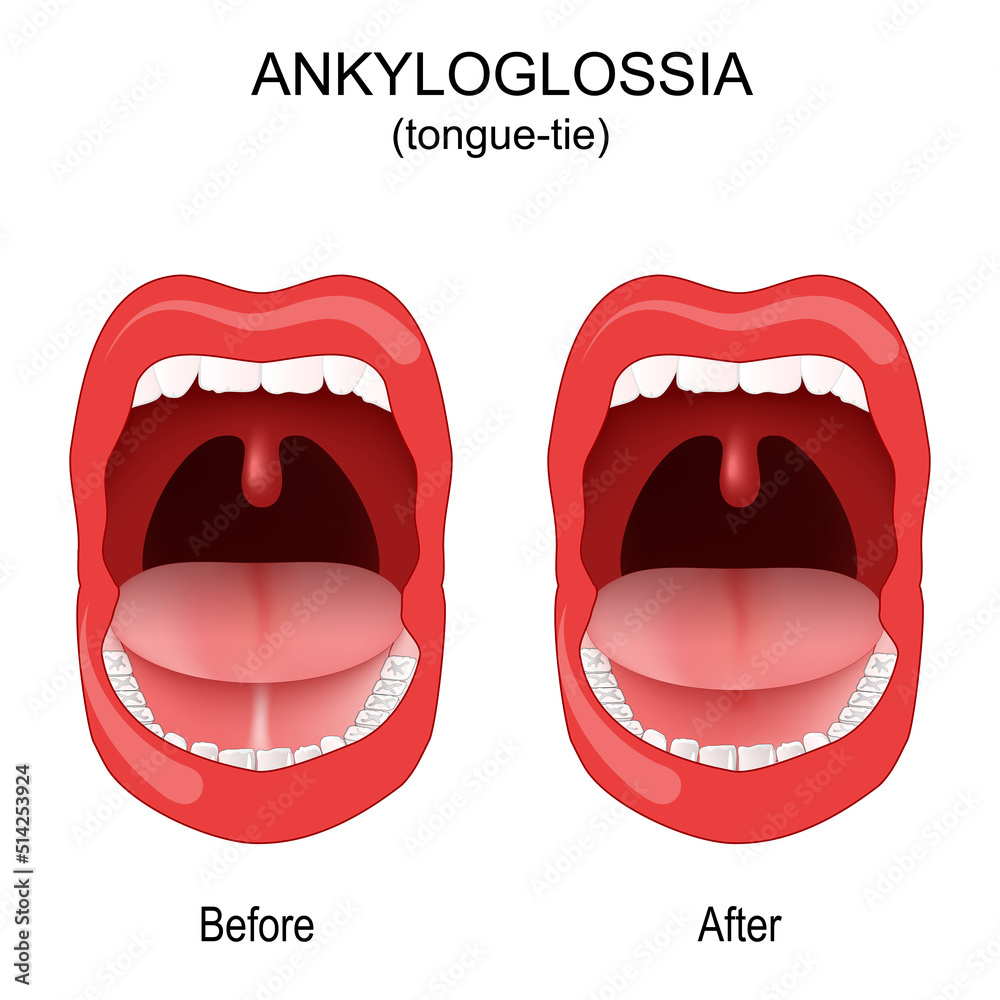
What is a tongue tie? A tongue tie (also called ankyloglossia) is when the thin band of tissue under the tongue (the lingual frenulum) is shorter, tighter, or attached in a way that restricts how the tongue moves. For some people it causes no issues at all, but for others it can affect feeding, speech, oral development, and comfort.
In this guide, we explain tongue tie symptoms across babies, children, and adults, the most common tongue tie causes, how tongue tie diagnosis is made, and what treatment options exist, including tongue tie surgery. We’ll also cover realistic expectations, risks, and tongue tie complications to help you make informed decisions.
Quick answers
- A tongue tie is a restricted tongue movement caused by a tight or short frenulum.
- In babies, the biggest red flags are breastfeeding difficulties, poor latch, prolonged feeds, clicking, and parental nipple pain.
- In children, concerns are more often about speech clarity, picky eating textures, mouth breathing, or dental development (but tongue tie is not always the cause).
- In adults, symptoms may include tension under the tongue, difficulty with certain sounds, discomfort during eating, oral hygiene challenges, or jaw/neck strain.
- Diagnosis is functional, meaning we look at what the tongue can do (and whether it’s causing problems), not just what it looks like.
- Treatment ranges from monitoring and therapy to a small release procedure (frenotomy/frenuloplasty) when clinically appropriate.
What is a tongue tie (ankyloglossia)?
Under your tongue is a small fold of tissue called the lingual frenulum. Everyone has one, but in some people it’s positioned or shaped in a way that limits tongue movement.
A tongue tie can vary a lot:
- Some are obvious (the tongue can look “heart-shaped” when lifted).
- Some are less visible but still restrict movement, especially if the tissue is tight and thick.
- Many are mild and never cause symptoms.
A helpful way to think about it is this: tongue tie is only a “problem” when it’s causing functional issues such as feeding difficulties, speech problems, or oral discomfort.
Tongue tie symptoms: babies, children, and adults
Tongue tie symptoms in babies
Tongue movement plays a big role in effective breastfeeding. When the tongue can’t extend, lift, or cup properly, it can affect milk transfer and comfort.
Common baby signs include:
- Difficulty latching or staying latched
- Clicking sounds during feeding
- Long feeds with little satisfaction
- Frequent feeding but slow weight gain
- Dribbling milk, gassiness, or unsettled behaviour after feeds
- Preference for one breast or feeding position
Common signs for the breastfeeding parent:
- Nipple pain, pinching, or damage
- Misshapen nipples after feeds (lipstick shape)
- Blocked ducts or mastitis due to ineffective milk removal
- Feeling like feeding is constantly hard work
Important note: breastfeeding challenges are common and can have many causes. A tongue tie may be one factor, but it’s not always the main one. A good assessment usually involves a lactation consultant alongside a clinician experienced in tongue tie diagnosis.
Tongue tie symptoms in children
As kids grow, tongue tie concerns often shift from feeding to speech, eating, and oral development. Some children compensate well; others don’t.
Possible signs include:
- Speech that is hard to understand at certain ages (especially with sounds requiring tongue tip elevation)
- Difficulty licking lips, ice cream, or moving food around the mouth
- Gagging on certain textures or very slow eating
- Mouth breathing or open-mouth posture (can be multi-factorial)
- Ongoing messy eating beyond what’s typical for age
- Trouble keeping teeth clean (limited tongue mobility can contribute)
A reality check: tongue tie is not the cause of every speech delay or “unclear speech”. Many speech sound issues are developmental and resolve with time or speech therapy. The key is whether tongue movement is actually limiting speech mechanics.
Tongue tie symptoms in adults
Adults often report symptoms related to restriction, tension, or function rather than obvious appearance.
Common complaints include:
- Tightness or pulling sensation under the tongue
- Difficulty with certain speech sounds (sometimes more noticeable when tired or speaking quickly)
- Discomfort when eating, kissing, or playing wind instruments
- Difficulty licking teeth or clearing food from the mouth
- Gum issues from plaque retention (not always, but can be a factor)
- Jaw tension or neck strain (often multi-factorial, but restricted tongue mobility can contribute)
Adults can also have a tongue tie that was never noticed in childhood, especially if they adapted well.
Tongue tie causes: why does it happen?
The exact reason tongue tie occurs isn’t always clear. It’s generally considered a congenital (present at birth) variation in how the lingual frenulum forms.
Tongue tie causes and risk factors commonly discussed include:
- Normal biological variation in frenulum length/attachment
- Possible familial patterns (it can run in families)
- Being more commonly identified in some groups of babies, partly due to increased awareness and screening
What matters most clinically is not “why it formed” but whether it restricts function.
Tongue tie diagnosis: how it’s assessed
A good tongue tie diagnosis usually includes two parts:
1) How it looks
A clinician will look at:
- Frenulum thickness and attachment point
- Tongue shape when lifted (for example, a notch or “heart shape”)
- Whether the tongue can lift toward the palate and extend past the lower lip
2) How it works (the most important part)
Function-focused assessment may include:
- Tongue elevation, extension, and side-to-side movement
- Sucking patterns (in babies)
- Feeding efficiency, latch quality, and parental comfort
- Speech assessment (often best done with a speech pathologist)
- Oral posture and swallowing patterns
In our experience, the most helpful approach is team-based:
- Babies: lactation consultant + clinician experienced with infant oral restrictions
- Children: dentist/GP/ENT + speech pathologist (and sometimes an oral myofunctional therapist)
- Adults: dentist + speech pathologist/myofunctional therapist (as needed)
Key takeaway: A visible frenulum is normal. A tongue tie diagnosis is most meaningful when it connects clearly to symptoms.
Does tongue tie cause speech problems?
Sometimes, but not always.
Tongue mobility can influence certain speech sounds that require:
- Tongue tip elevation (upward movement)
- Precise tongue placement behind the teeth or on the palate
However:
- Many children with tongue tie speak normally.
- Many children with unclear speech do not have a tongue tie.
- Speech issues can be developmental, hearing-related, or habit-related.
If speech is the main concern, we usually recommend starting with a speech assessment. If the speech pathologist suspects restricted tongue mobility is a barrier to progress, that’s when a release procedure may be considered as part of a broader plan.
Tongue tie and feeding: breastfed and bottle-fed babies
Tongue tie discussions often focus on breastfeeding, but bottle-fed babies can also struggle if tongue movement is restricted.
Possible feeding impacts include:
- Poor seal leading to milk leakage
- Excess air intake (wind, reflux-like symptoms)
- Fatigue during feeds
- Difficulty coordinating suck-swallow-breathe
If feeding is difficult, it’s worth assessing:
- Latch and positioning
- Bottle type/flow rate
- Oral anatomy and function
- Any underlying medical issues
A tongue tie release is not always the first step, and it’s most effective when part of a structured feeding support plan.
Treatment options: do all tongue ties need fixing?
No. Many tongue ties do not need treatment.
Treatment depends on:
- Age
- Symptoms and severity
- Whether other support (feeding help or therapy) has been tried
- Whether the restriction is clearly linked to the problem
Conservative management (watch and support)
Often appropriate when:
- Baby is feeding well and gaining weight
- There’s no significant pain or feeding distress
- Child’s speech is age-appropriate
- Adult symptoms are mild and manageable
Support options can include:
- Lactation support and positioning strategies
- Speech therapy
- Oral exercises guided by a qualified professional (when indicated)
Tongue tie surgery (release procedures)
When function is clearly affected, a release may be recommended. The two most common procedures are:
- Frenotomy: a quick release of the frenulum (commonly in babies)
- Frenuloplasty: a more involved procedure (more common in older children/adults or thick ties), sometimes with stitches
Some providers use scissors, others use electrosurgery or laser. The “best” method depends on the case, the clinician’s training, and the patient’s needs.
What happens during a tongue tie release?
This varies by age and setting, but here’s a general guide.
Babies
- Often done as a short in-chair procedure
- Feeding is typically encouraged soon after
- Follow-up focuses on latch support and symptom improvement
Children and adults
- Assessment often includes function and therapy planning
- The procedure may be performed in a clinic setting or (less commonly) in hospital
- Post-procedure care may involve exercises or therapy to retrain movement patterns (this is individualised)
Key takeaway: A release changes anatomy, but function improves best when the tongue learns to move well after release.
Recovery and aftercare: what to expect
Recovery experiences differ. Some people notice improvement quickly, while others improve gradually over weeks as habits and muscle patterns change.
Common post-procedure experiences can include:
- Mild discomfort or soreness
- Temporary feeding fussiness in babies
- Increased tongue movement over time
- The need for follow-up support (lactation or speech therapy)
Aftercare instructions vary between clinicians. If exercises are recommended, make sure they’re:
- Age-appropriate
- Clearly explained
- Followed up to ensure technique is correct
Tongue tie complications: what can happen if it’s untreated?
Not everyone will have problems long-term, and many people with tongue tie do just fine.
When tongue tie is significantly restrictive and symptoms are present, possible complications can include:
- Ongoing feeding difficulties and parental pain (in babies)
- Persistent speech challenges (in some children)
- Compensatory swallowing patterns (tongue thrust) which may influence dental development
- Oral hygiene challenges if the tongue can’t clear food effectively
- Ongoing tension and discomfort under the tongue (some teens/adults)
It’s important to avoid assuming a tongue tie is the cause of every issue. The goal is to treat the person’s symptoms, not just the anatomy.
Risks and potential complications of tongue tie surgery
Tongue tie surgery is generally considered low risk when performed by a trained clinician, but no procedure is risk-free.
Potential tongue tie surgery risks include:
- Bleeding
- Infection (rare)
- Pain and temporary feeding disruption
- Scar tissue or re-attachment (sometimes discussed as “re-tethering”)
- Incomplete symptom improvement (especially if the issue was multifactorial)
A balanced view: for the right patient, the benefits can be significant. But a release is not a guaranteed fix, and careful assessment matters.
When should you seek help urgently?
Seek prompt medical advice if you notice:
- Poor weight gain or dehydration signs in a baby (fewer wet nappies, lethargy)
- Severe breastfeeding pain or nipple trauma that isn’t improving with support
- Breathing difficulties, choking episodes, or turning blue during feeds
- A child who is struggling to eat enough, losing weight, or avoiding many textures
- Persistent speech issues impacting school or confidence
Tongue tie treatment in Neutral Bay: how we can help
At Cosmic Smile in Neutral Bay, we take a practical, patient-first approach. That means we don’t treat tongue ties based on appearance alone. We focus on:
- A careful assessment of tongue function
- Your symptoms and goals (feeding, speech, comfort, oral health)
- Coordinating with the right professionals (lactation consultants, speech pathologists, GPs/ENTs) when needed
- Clear, honest guidance on whether a release is likely to help in your situation
If you’re unsure whether tongue tie is contributing to your or your child’s symptoms, we can talk you through the options and next steps.
Costs: what does tongue tie treatment usually cost in Australia?
Costs vary widely depending on:
- Baby vs child vs adult
- The complexity of the tie
- Whether it’s done in a clinic or hospital
- Whether stitches or sedation are involved
- Provider type and follow-up needs
As a very general guide in Australia, a simple in-clinic release may range from a few hundred dollars, while more complex procedures can be higher, particularly if performed in hospital. Private health cover and referral pathways can also affect out-of-pocket costs.
We recommend asking for:
- A written quote
- What follow-ups are included
- What support is recommended after the procedure (lactation or speech therapy)
Helpful external resources (Australia)
For broader reading, you may find these helpful:
- Australian Dental Association (ADA)
- Healthdirect Australia
- Australian Breastfeeding Association
- Raising Children Network
- NSW Health
(External link suggestion: link “Healthdirect Australia” to Healthdirect’s tongue tie or infant feeding resources.)
FAQs
1) What is a tongue tie and how do I know if it’s a problem?
A tongue tie is a tight or short band of tissue under the tongue that can restrict movement. It becomes a problem when it causes symptoms like feeding difficulty, speech issues, or oral discomfort. A proper assessment looks at function, not just appearance.
2) What are the most common tongue tie symptoms in babies?
Common signs include difficulty latching, clicking during feeds, long feeds, poor milk transfer, and unsettled feeding. Parents may experience nipple pain, damage, or recurrent blocked ducts. Because many things can affect feeding, it’s best assessed with lactation support as well.
3) What are tongue tie causes?
Tongue tie is usually present from birth and reflects natural variation in how the frenulum develops. It can sometimes appear to run in families. In most cases, the exact cause isn’t something you could have prevented.
4) How does tongue tie diagnosis work?
Tongue tie diagnosis involves checking both how the frenulum looks and how the tongue functions. In babies, this often includes a feeding assessment; in children, speech and eating patterns matter too. A team approach with lactation consultants or speech pathologists can be very helpful.
5) Is tongue tie surgery always necessary, and what are tongue tie complications?
Tongue tie surgery isn’t always necessary, especially if there are no symptoms. When symptoms are significant and clearly linked to restriction, a release can help, but outcomes vary and follow-up support may be needed. Tongue tie complications (untreated) can include ongoing feeding problems, persistent functional limits, or hygiene challenges, but many people have no long-term issues.
