
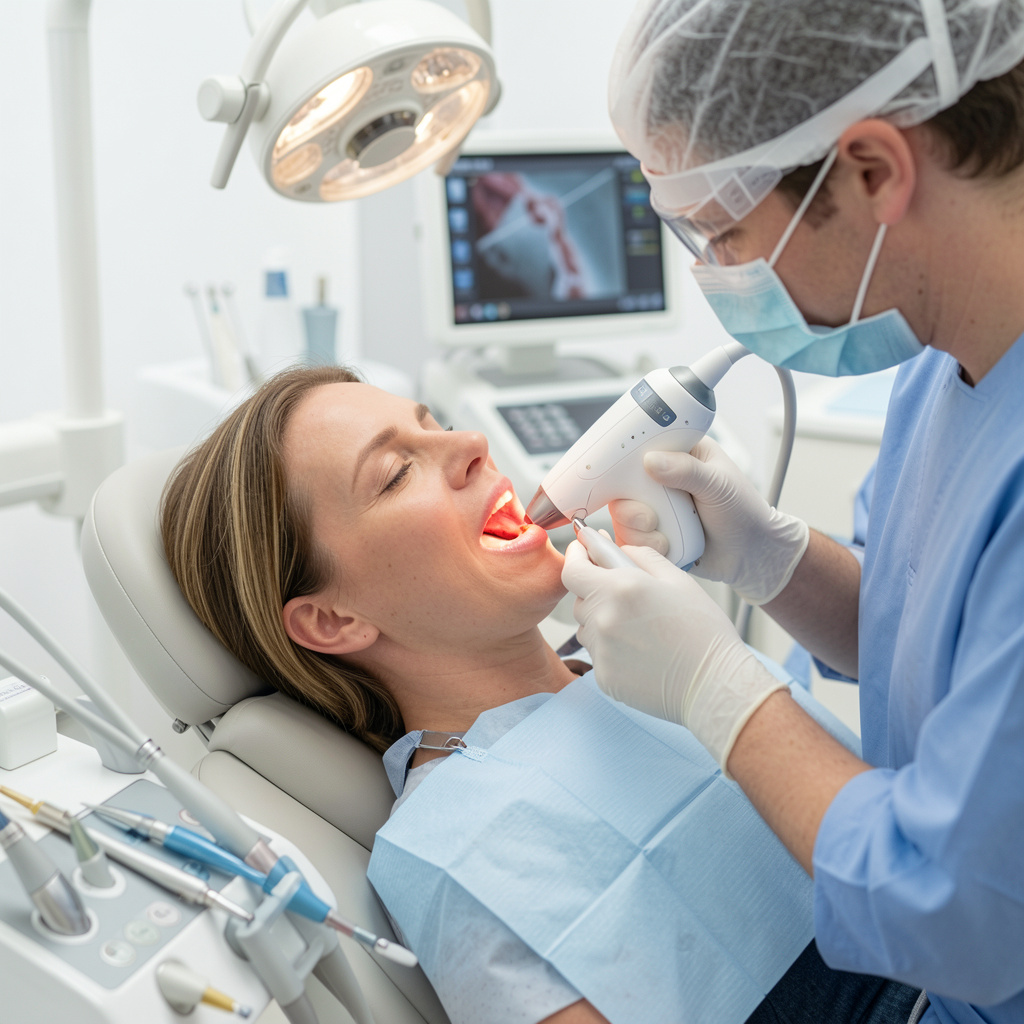
If you have been told you snore, or you have noticed that your breathing sounds different at night, you may have already started looking into what could help.
Snoring can affect your own sleep as well as the sleep of the person beside you. One option you may come across is NightLase, a laser-based treatment intended to help reduce snoring in suitable patients.
So, how does NightLase work?
NightLase uses controlled laser energy on selected soft tissues at the back of the mouth and throat. The treatment is designed to create a thermal effect in the tissue, which may lead to tissue remodelling and increased firmness over time. Because snoring commonly involves vibration of relaxed soft tissues as air moves through the upper airway during sleep, reducing that vibration may help lessen snoring in appropriately selected cases.
At Cosmic Smile Laser Dental in Neutral Bay, NightLase laser snoring treatment is one option that may be discussed with patients concerned about snoring.
However, NightLase is not suitable for everyone who snores, and snoring should not automatically be assumed to be a simple soft-tissue problem. In some people, it can be associated with obstructive sleep apnoea (OSA) or other airway concerns. Assessment is therefore important before deciding whether NightLase or another approach may be appropriate.
What Is NightLase?
NightLase is a non-surgical laser treatment directed at soft tissues in the oral cavity and throat that may contribute to snoring.
Unlike surgical procedures, it does not involve cutting the soft palate or placing stitches. It is also different from an oral appliance, such as a mandibular advancement device, which is worn while sleeping.
Instead, laser energy is applied to selected areas of soft tissue during treatment.
For suitable patients, the intention is to encourage changes in the treated tissue that may reduce its tendency to vibrate during sleep.
NightLase remains a clinical treatment, however. A professional assessment is necessary to determine whether it may be appropriate for the particular factors contributing to your snoring.
Why Does Snoring Happen?
Snoring occurs when structures in the upper airway vibrate as you breathe during sleep.
As you sleep, muscles in and around the throat relax. In some people, this contributes to narrowing of the airway and vibration of soft tissues as air passes through.
Healthdirect explains that snoring involves vibrations in the throat during sleep and that several factors can contribute, including alcohol consumption, nasal congestion, sleeping position, mouth breathing and body weight.
Healthdirect guidance on snoring and when to seek medical advice
Importantly, snoring has more than one possible cause. Factors can include:
- Relaxation or vibration of soft tissues in the throat
- Nasal congestion or obstruction
- Sleeping position
- Alcohol consumption
- Mouth breathing
- Jaw and airway anatomy
- Enlarged tissues
- Weight-related airway changes
- Obstructive sleep apnoea
Because of these different causes, a treatment designed to affect soft tissue at the back of the mouth will not necessarily address every type of snoring.
How Does NightLase Work?
NightLase treatment involves applying controlled laser energy to selected soft tissues in the mouth and throat, often including areas around the soft palate.
The treatment creates controlled heating within the targeted tissue. The aim is to stimulate a tissue response that may gradually increase firmness in the treated areas.
Why Might Firmer Soft Tissue Affect Snoring?
Snoring can occur when relaxed soft tissue vibrates as air passes through a narrowed upper airway.
If soft tissue laxity is contributing to that vibration, changes in tissue firmness may potentially reduce the amount of vibration in suitable patients.
This is the principle behind NightLase.
However, NightLase should not be described as a cure for snoring. The cause of snoring varies considerably between people, and treatment response may also vary.
A dentist needs to consider your symptoms, oral structures and relevant health history before discussing whether NightLase may be suitable.
What Happens During a NightLase Procedure?
The exact treatment process depends on the patient and the clinical protocol being followed, but NightLase treatment generally involves several stages.
1. Assessment Before Treatment
Assessment is an important first step.
A clinician may ask about:
- How long you have been snoring
- How frequently you snore
- Whether another person has noticed pauses in your breathing
- Whether you wake gasping or choking
- Whether you wake feeling unrefreshed
- Whether you experience excessive daytime sleepiness
- Whether you have nasal congestion
- Whether you breathe through your mouth while sleeping
- Whether you have previously tried other snoring treatments
- Relevant medical and sleep history
The purpose of this discussion is not simply to confirm that you snore. It is to help identify whether there are signs that require medical or sleep assessment and whether NightLase may be reasonable to consider.
At Cosmic Smile Laser Dental, you can find more information about Dr Jason Pang and the practice before arranging an assessment.
2. Laser Treatment of Selected Soft Tissue
If NightLase is considered suitable, laser energy is directed at selected areas of soft tissue at the back of the mouth.
Treatment does not involve surgical incisions or stitches.
People can experience treatment differently. Rather than assuming the procedure will feel the same for everyone, your clinician should explain the expected sensations and what to do if you experience discomfort.
3. Treatment Over Multiple Visits
NightLase is generally performed as a course of treatment rather than being regarded as a one-appointment solution.
This is because the intended tissue response develops over time.
The number and timing of appointments can vary according to the treatment protocol and individual clinical circumstances. Your clinician can explain the recommended schedule after assessing you.
4. Review and Monitoring
Follow-up can help determine how symptoms are changing and whether any further assessment or management should be considered.
Your clinician may discuss:
- Changes in reported snoring
- Feedback from your sleeping partner
- Sleep quality
- Any new or ongoing symptoms
- Whether further sessions are appropriate
- Whether another healthcare professional should be involved
Treatment results and duration of any improvement can vary between individuals.
Is NightLase Painful?
NightLase does not involve surgical cutting, but individual comfort during any dental or laser procedure can vary.
Some people may notice warmth as the laser is applied to the targeted tissue. Whether anaesthetic is required depends on the treatment protocol and individual circumstances.
If you are anxious about treatment or have particular sensitivities, discuss this during your assessment so your clinician can explain what you are likely to experience.
How Long Does a NightLase Appointment Take?
NightLase sessions are generally designed as relatively short chairside appointments, although treatment time can vary.
The actual appointment length depends on factors such as:
- The areas being treated
- The treatment protocol
- Your individual anatomy
- Any additional assessment required
Your clinician can provide a more specific estimate after evaluating your needs.
Who Might Be Suitable for NightLase?
NightLase may be discussed with people whose snoring appears to involve vibration or laxity of soft tissues accessible to treatment.
However, suitability cannot be determined simply because somebody snores.
NightLase may be less relevant when snoring is primarily associated with another problem, such as:
- Significant nasal obstruction
- Particular anatomical airway issues
- Other untreated sleep-related breathing disorders
- Suspected or undiagnosed obstructive sleep apnoea
The appropriate approach depends on what is actually contributing to the snoring.
Snoring and Obstructive Sleep Apnoea Are Not the Same Thing
Snoring and obstructive sleep apnoea are related, but they are not interchangeable terms.
A person can snore without having OSA. However, loud or persistent snoring can occur in people with OSA.
Healthdirect explains that obstructive sleep apnoea involves repeated partial or complete blockage of the upper airway during sleep, causing breathing to reduce or temporarily stop. Symptoms can include loud snoring, witnessed pauses in breathing, waking while gasping or choking, morning headaches and daytime sleepiness.
Healthdirect information about obstructive sleep apnoea
When Should Snoring Be Medically Assessed?
Consider speaking with your GP or another appropriately qualified health professional if you or your sleeping partner notice signs such as:
- Pauses in breathing during sleep
- Waking while gasping or choking
- Significant daytime sleepiness
- Regular morning headaches
- Feeling persistently unrefreshed despite apparently adequate sleep
- Very loud or disruptive snoring
- Concerns about possible sleep apnoea
Healthdirect recommends medical assessment when obstructive sleep apnoea is suspected and notes that a doctor may refer someone for a sleep study or specialist assessment.
A sleep study may be required in some circumstances to assess breathing and oxygen levels while you sleep.
NightLase should not be used as a substitute for appropriate medical investigation when OSA or another significant sleep-related breathing disorder is suspected.
Does NightLase Treat Sleep Apnoea?
NightLase should not be presented as a replacement for proper diagnosis and evidence-based management of obstructive sleep apnoea.
OSA is a medical condition involving repeated restriction or blockage of airflow during sleep. Its management depends on factors including severity, symptoms and individual health circumstances.
Healthdirect lists management options that can include lifestyle measures, continuous positive airway pressure (CPAP), appropriately fitted oral appliances and, in selected circumstances, surgery.
If your history suggests possible OSA, your dentist may recommend discussing your symptoms with your GP or another sleep-health professional before proceeding with treatment directed specifically at snoring.
What Can You Expect After NightLase Treatment?
NightLase does not involve surgical incisions, so there is no surgical wound in the traditional sense.
Individual experiences after treatment can vary. Some people may notice temporary warmth, dryness or a different sensation in the treated areas.
Your clinician should provide instructions relevant to your individual treatment.
It is also important not to expect an immediate or guaranteed change in snoring after a single session.
NightLase is intended to work through a gradual tissue response, so any changes may develop over the course of treatment rather than immediately.
How Quickly Does NightLase Reduce Snoring?
There is no single timeline that applies to everyone.
Response can depend on factors such as:
- The primary cause of snoring
- Individual airway anatomy
- The tissue being treated
- The treatment protocol
- Lifestyle and sleep factors
- Other health conditions
Some people may notice a change during a treatment course, while others may have a different response.
NightLase should therefore be discussed in terms of potential improvement rather than guaranteed elimination of snoring.
How Long Do NightLase Results Last?
The duration of any improvement can vary from person to person.
Soft tissues and other factors affecting the airway can change with time. Your clinician may therefore recommend periodic review and, in some cases, discuss whether additional treatment is appropriate.
There should be no assumption that NightLase provides a permanent result.
Individual assessment and ongoing review are the best ways to discuss likely expectations for your circumstances.
Other Factors That Can Affect Snoring
Snoring is often influenced by more than one factor.
Healthdirect notes that snoring can be associated with lifestyle, sleeping position, alcohol, smoking, nasal problems and body weight, among other factors.
Depending on the cause, management may therefore involve addressing additional contributors rather than relying on a single treatment.
Your GP, dentist or sleep-health professional may discuss factors such as:
- Sleeping position
- Nasal congestion or allergies
- Alcohol consumption
- Smoking
- Medicines that affect sleep
- Weight, where clinically relevant
- Oral appliances
- Assessment for sleep-disordered breathing
The appropriate approach should be tailored to the individual.
Is NightLase Right for You?
Whether NightLase is suitable depends on what is contributing to your snoring and your individual oral, airway and general health circumstances.
A professional assessment can help clarify:
- Whether your symptoms require medical or sleep assessment first
- Whether soft-tissue vibration appears to be contributing to your snoring
- Whether NightLase may be appropriate to consider
- What the treatment involves
- How many appointments may be recommended
- What results can reasonably be expected
- Whether other management options should also be considered
Snoring has several possible causes, so choosing treatment before understanding those causes may not be appropriate.
Talk to Cosmic Smile Laser Dental About NightLase
If snoring is affecting you or your household and you would like to find out whether NightLase may be suitable, an individual assessment is the appropriate place to start.
The team at Cosmic Smile Laser Dental in Neutral Bay can discuss your symptoms, explain how NightLase works and determine whether further medical or sleep assessment may be appropriate before treatment.
You can contact Cosmic Smile Laser Dental to arrange a consultation and discuss your options.
Treatment suitability and results vary between individuals, and NightLase may not be appropriate for every cause of snoring.
FAQs About NightLase Treatment for Snoring
Is NightLase treatment painful?
NightLase does not involve surgical cutting, but individual comfort can vary. Some people may notice warmth during treatment. Your clinician can explain what sensations to expect and whether any comfort measures are appropriate for your individual treatment.
How many NightLase sessions are usually needed?
NightLase is generally delivered as a course of treatment rather than a single appointment. The number and timing of sessions can vary depending on the treatment protocol and your individual assessment.
Does NightLase treat sleep apnoea?
NightLase should not be considered a substitute for appropriate assessment or management of obstructive sleep apnoea. If OSA is suspected, your dentist may recommend speaking with your GP or another sleep-health professional and having further assessment before proceeding with snoring treatment.
How long do the effects of NightLase last?
The duration of any improvement varies between individuals. Soft tissues and other factors contributing to snoring can change over time, so periodic review or further treatment may be discussed depending on your symptoms and response.
Is NightLase suitable for everyone who snores?
No. Snoring has several possible causes, and NightLase is not appropriate for every person who snores. An individual assessment is needed to consider whether soft-tissue vibration is contributing to your snoring and whether NightLase may be suitable.
How does NightLase reduce snoring?
NightLase applies controlled laser energy to selected soft tissues at the back of the mouth and throat. The intended tissue response may increase firmness and reduce vibration during sleep, which may lessen snoring in suitable patients.
Should I have a sleep study before NightLase?
Not everyone who snores requires a sleep study. However, if your symptoms suggest possible obstructive sleep apnoea or another sleep-related breathing disorder, further medical assessment and a sleep study may be recommended before treatment. Your dentist or GP can advise based on your individual symptoms.
