
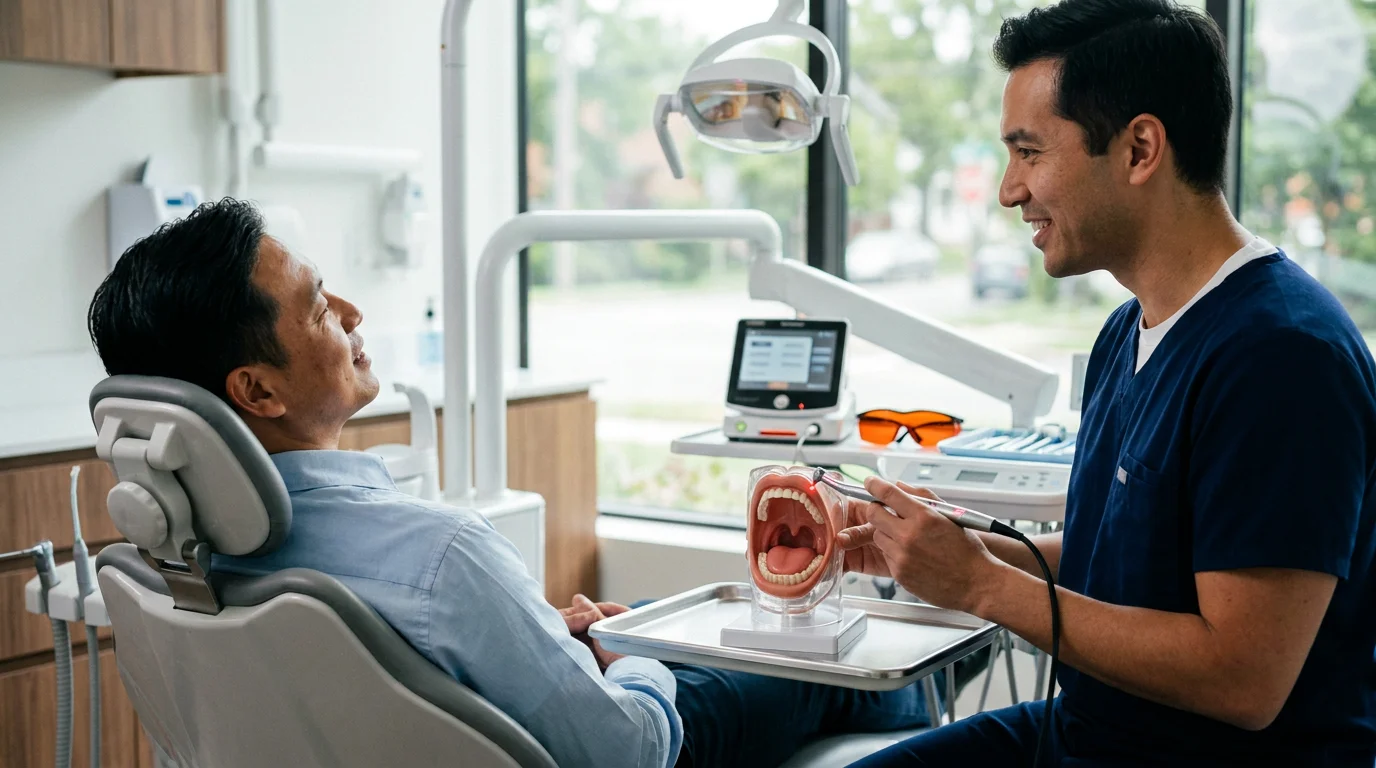
If you are considering laser treatment for snoring, one of your first questions may be: does NightLase hurt?
The word “laser” can sound intimidating, particularly when treatment involves the mouth and throat. However, NightLase is different from surgical procedures that involve cutting or removing tissue. That does not mean every patient will experience the treatment in exactly the same way.
NightLase uses controlled laser energy on selected soft tissues at the back of the mouth and throat. The intended effect is to warm the tissues in a controlled way, which may encourage tissue changes that can reduce vibration associated with snoring in appropriately selected patients.
For some people, the sensation is mainly warmth. Others may notice tingling, dryness or mild throat irritation. Individual comfort can vary according to sensitivity, anatomy, the areas treated and the clinical protocol used.
At Cosmic Smile Laser Dental in Neutral Bay, NightLase may be considered for suitable patients after an individual assessment. The practice describes it as one laser-based option for people concerned about snoring, with suitability depending on what is contributing to the person’s symptoms.
It is therefore more accurate to describe NightLase as a treatment that may involve relatively mild sensations for some patients rather than promising that it will be completely painless.
What Does NightLase Treatment Involve?
NightLase is a non-surgical laser treatment intended to address selected soft tissues in the mouth and throat that may contribute to snoring.
Snoring occurs when tissues within the upper airway vibrate during sleep. Healthdirect Australia explains that snoring involves vibration in the throat as the airway narrows during sleep and that there can be several possible contributing factors.
During NightLase treatment, laser energy is directed at selected areas, commonly involving soft tissues around the palate and throat.
The procedure does not involve surgically cutting away the soft palate or placing stitches.
NightLase is also different from other approaches to snoring, such as a mandibular advancement splint, which is an oral appliance worn while sleeping.
Treatment is generally planned as a course rather than assuming that one appointment will be appropriate for everyone. The number and timing of sessions depend on the clinical protocol and individual assessment.
You can find further information about NightLase laser snoring treatment and discuss whether it may be relevant to your circumstances.
What Does NightLase Feel Like?
Warmth is one of the sensations patients may notice during treatment.
Because NightLase applies controlled laser energy to soft tissues, you may experience:
- Warmth in the treated area
- Mild tingling or prickling
- A dry sensation
- Temporary throat sensitivity
- A mildly scratchy sensation afterwards
Some people may notice very little discomfort, while others may be more sensitive to the treatment.
The experience is also different from many conventional dental procedures. NightLase does not involve drilling a tooth or making a surgical incision in the soft palate.
However, the back of the mouth and throat can be sensitive. A person with a strong gag reflex, dental anxiety or sensitive oral tissues may experience treatment differently from someone without those concerns.
This is why an individual consultation is important.
Does NightLase Hurt During the Procedure?
NightLase may involve some discomfort, but the intensity varies between patients.
Some people mainly notice warmth as the laser is applied. Others may experience a stronger heat sensation or may benefit from short pauses during the procedure.
Factors that may influence comfort include:
- The areas being treated
- Your oral anatomy
- Your sensitivity to heat
- Your gag reflex
- Existing throat irritation or dryness
- Anxiety about dental or medical procedures
- The treatment protocol and settings used
You should tell your clinician if the treatment begins to feel excessively warm or uncomfortable.
A clinical team can monitor your response throughout the procedure and determine whether a pause or other adjustment is appropriate.
It is also helpful to discuss concerns beforehand rather than assuming you need to tolerate discomfort without saying anything.
Is Anaesthetic Needed for NightLase?
Anaesthetic may not always be necessary for NightLase, but requirements depend on the individual patient and clinical protocol.
Because the procedure does not involve surgical cutting, it differs from treatments that routinely require local anaesthetic injections.
Your clinician can explain before treatment:
- Whether anaesthetic is normally used
- What sensations you may experience
- What comfort measures are available
- How you can communicate if treatment feels uncomfortable
If you are specifically searching for a “painless snoring treatment”, it is important to keep expectations realistic.
No healthcare procedure should be assumed to be completely painless for every person. A more useful discussion is what sensations are likely in your case and how your comfort will be monitored.
Cosmic Smile Laser Dental also provides information about the broader use of laser dentistry within the practice.
What Happens After NightLase?
After treatment, some patients may feel relatively normal, while others may notice temporary sensations around the treated tissues.
These can include:
- Mild throat dryness
- Warmth
- A scratchy feeling
- Temporary sensitivity
- Increased awareness of the back of the throat
Individual experiences vary.
Follow the aftercare instructions provided by your clinician, including any advice about eating, drinking or oral care.
If symptoms are severe, unexpected or do not settle as advised, contact the treating clinic for assessment rather than assuming they are a normal part of recovery.
Will I Need Time Off After NightLase?
NightLase is a non-surgical procedure, so its recovery process is different from that of surgery.
Some patients may be able to return to their usual daily activities following treatment, but this should not be guaranteed for everyone.
How you feel afterwards can depend on:
- Individual sensitivity
- The areas treated
- Your response to the procedure
- Any temporary throat irritation
- Your general health and circumstances
Your clinician can advise what activities are appropriate following your particular treatment.
For a first appointment, you may prefer to keep your schedule reasonably flexible until you know how you personally respond.
Why Does NightLase Comfort Vary Between Patients?
No two patients have exactly the same anatomy or sensitivity.
Comfort during NightLase may be influenced by:
- Sensitivity of your oral and throat tissues
- Gag reflex
- Treatment areas
- Tolerance of warmth
- Previous dental experiences
- Anxiety
- Existing throat dryness or irritation
- Clinical technique
- Treatment settings
- Communication with your clinician
Someone who has a pronounced gag reflex may find treatment around the back of the mouth more challenging, for example.
Similarly, anxiety can make unusual sensations feel more intense for some people.
These differences do not necessarily mean treatment will be difficult. They are reasons why individual assessment and communication with your clinician matter.
The Cosmic Smile Laser Dental team can discuss your symptoms, medical history and treatment concerns before determining whether NightLase is appropriate to consider.
Is NightLase the Same as Surgery for Snoring?
No. NightLase is not the same as surgical treatment for snoring.
Surgical procedures may involve removing, reshaping or repositioning tissues and can have different anaesthetic, recovery and risk considerations.
NightLase applies laser energy to selected soft tissues without a surgical incision.
However, being non-surgical does not mean that NightLase is:
- Completely risk-free
- Completely painless for everyone
- Suitable for all people who snore
- Guaranteed to stop snoring
Snoring can have different causes.
Healthdirect notes that factors associated with snoring can include airway anatomy, nasal blockage, mouth breathing, alcohol, body weight and sleeping position, among others.
Understanding what is contributing to your snoring is therefore important before choosing a treatment.
Can NightLase Treat Sleep Apnoea?
Snoring and obstructive sleep apnoea are not the same condition.
Some people snore without having obstructive sleep apnoea. Others who snore may have repeated narrowing or blockage of their airway during sleep.
Healthdirect lists symptoms of obstructive sleep apnoea that can include:
- Pauses in breathing during sleep
- Loud snoring
- Waking while gasping or choking
- Unrefreshing sleep
- Daytime tiredness or sleepiness
- Morning headaches in some people
Obstructive sleep apnoea requires appropriate medical assessment and management.
NightLase should not be assumed to replace assessment or evidence-based treatment for suspected sleep apnoea.
If you or someone sleeping near you has noticed breathing pauses, gasping or choking during sleep, or if you experience substantial daytime sleepiness, discuss these symptoms with an appropriate medical practitioner.
Healthdirect provides more information about obstructive sleep apnoea and advises that medical or sleep-specialist assessment may be required.
When Should Snoring Be Medically Assessed?
Snoring is common, but there are situations where medical assessment is particularly important.
Healthdirect advises seeking medical advice if snoring is causing concern or if you wake gasping or choking. If sleep apnoea is suspected, a doctor may recommend referral to a sleep specialist or an overnight sleep study.
Seek appropriate assessment if snoring is accompanied by symptoms such as:
- Observed pauses in breathing
- Gasping or choking during sleep
- Marked daytime sleepiness
- Waking unrefreshed despite adequate time in bed
- Morning headaches
- Concerns about breathing during sleep
You can also read Healthdirect Australia’s information about snoring and when to seek medical advice.
Assessing these symptoms before pursuing snoring treatment can help ensure that a potentially important sleep-related breathing disorder is not overlooked.
What Should You Ask Before NightLase?
Before deciding whether to proceed, useful questions may include:
- What may be contributing to my snoring?
- Am I a suitable candidate for NightLase?
- Should I have medical or sleep assessment first?
- Do I need a sleep study?
- What will treatment feel like?
- What level of discomfort might I experience?
- Is anaesthetic likely to be needed?
- How many treatment sessions may be recommended?
- What are the possible side effects or limitations?
- What should I expect afterwards?
- Which symptoms should I report?
- What other snoring management options should I consider?
- What happens if my snoring does not improve?
A consultation should give you an opportunity to understand what treatment involves and what outcomes can reasonably be expected before you decide whether to proceed.
How to Make the NightLase Experience More Comfortable
Communication can play an important role in making treatment easier to manage.
Before Treatment
Tell your clinician if you:
- Feel anxious about laser treatment
- Have a strong gag reflex
- Have sensitive oral tissues
- Have had uncomfortable dental experiences previously
- Are concerned about heat or pain
- Currently have throat irritation or dryness
During Treatment
Let the clinician know if:
- The area feels too warm
- You need a pause
- You feel uncomfortable
- Your gag reflex becomes difficult to manage
You do not need to remain silent if something feels uncomfortable.
After Treatment
Follow the aftercare instructions provided specifically for you.
If you develop symptoms that are more severe than expected or do not settle within the timeframe discussed by your clinician, contact the practice for advice.
Thinking About NightLase in Neutral Bay?
If you are considering NightLase for snoring in Neutral Bay, an individual assessment is the appropriate starting point.
At Cosmic Smile Laser Dental, the clinical team can discuss your snoring history, relevant health information and symptoms before determining whether NightLase may be suitable to consider.
Assessment can also help determine whether medical or sleep evaluation should occur before proceeding with treatment.
NightLase should not be viewed as a treatment that is guaranteed to be painless or guaranteed to stop snoring. Your experience and potential response depend on individual anatomy, what is contributing to your snoring and other clinical factors.
If your main concern is whether NightLase hurts, discussing comfort, sensitivity and what to expect before treatment can help you make a more informed decision.
If you would like to discuss your snoring concerns and possible treatment options, contact Cosmic Smile Laser Dental to arrange an individual consultation.
FAQs
Does NightLase hurt?
NightLase may involve sensations such as warmth, tingling or mild throat irritation, but individual experiences vary. Some patients may notice relatively little discomfort, while others may be more sensitive. Your clinician can explain what to expect based on your assessment and treatment protocol.
Is NightLase completely painless?
NightLase should not be described as completely painless for everyone. Individual sensitivity, gag reflex, anxiety, anatomy and the areas treated can all influence comfort. Tell your clinician if treatment feels uncomfortable so they can assess how to proceed.
What does NightLase feel like?
Patients may notice warmth at the back of the mouth or throat during treatment. Some people may also experience tingling, dryness or a temporarily scratchy sensation afterwards. The type and intensity of sensations vary between individuals.
Will I need anaesthetic for NightLase?
Anaesthetic may not always be required, but this depends on the clinical protocol and individual circumstances. Your clinician can explain whether anaesthetic or other comfort measures are appropriate before treatment begins.
How long does discomfort after NightLase last?
Some people may notice little or no ongoing discomfort, while others may experience temporary dryness, warmth or throat irritation. Recovery varies between patients. Follow your clinician’s aftercare advice and contact the practice if symptoms are severe, unexpected or do not settle as advised.
Is NightLase suitable for everyone who snores?
No. Snoring has several possible causes, and NightLase is not appropriate for every patient. An individual assessment is needed to consider what may be contributing to your snoring and whether medical or sleep assessment should occur before treatment.
Should I have a sleep study before NightLase?
Not everyone who snores requires a sleep study. However, symptoms such as observed breathing pauses, gasping, choking or significant daytime sleepiness can be associated with obstructive sleep apnoea and warrant appropriate medical or sleep assessment. Your clinician or doctor can advise whether a sleep study should be considered.
Where can I ask about NightLase in Neutral Bay?
Cosmic Smile Laser Dental in Neutral Bay can assess your snoring concerns, explain what NightLase involves and discuss whether it may be appropriate to consider. The team can also advise whether further medical or sleep assessment may be appropriate before treatment.
